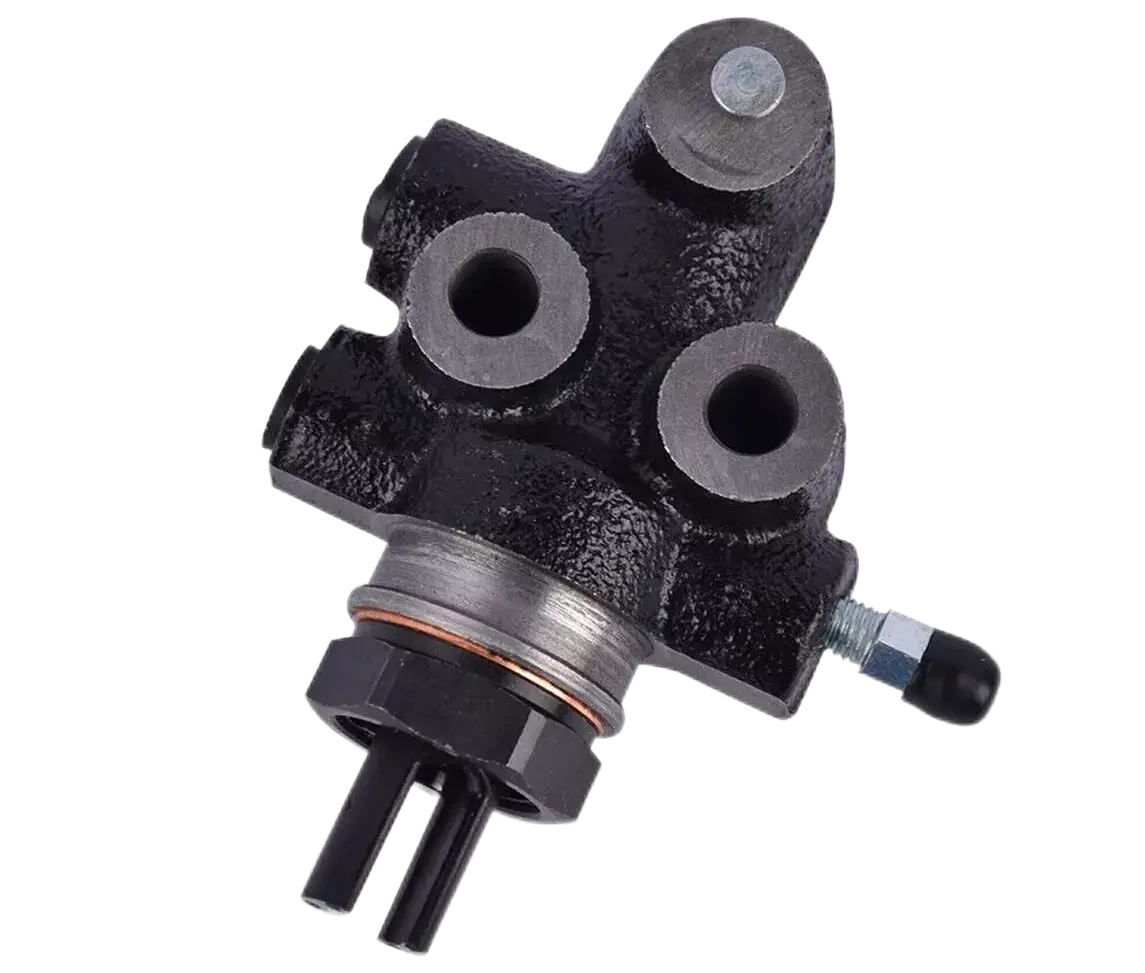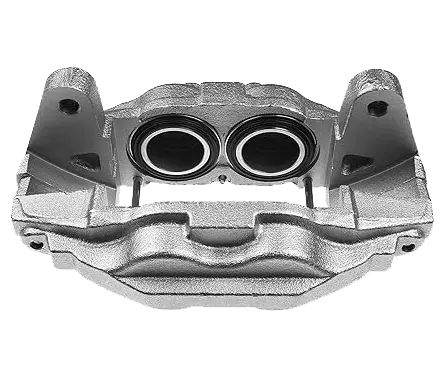
Precision-engineered master cylinders, calipers, and wheel cylinders for heavy-duty, passenger, and commercial vehicle applications.
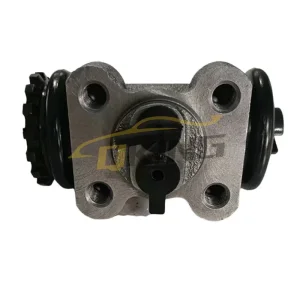
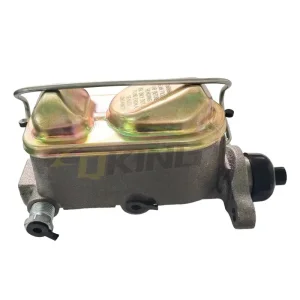
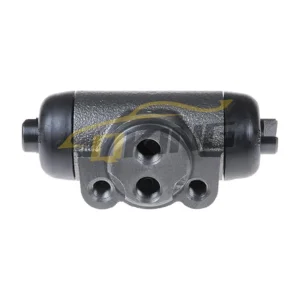
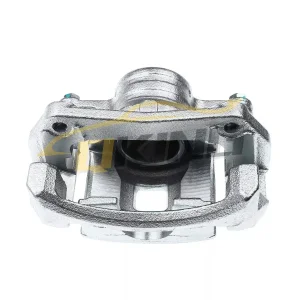
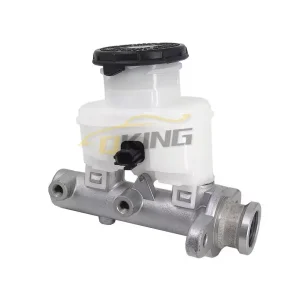
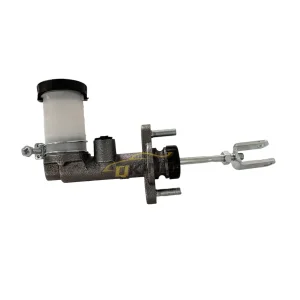
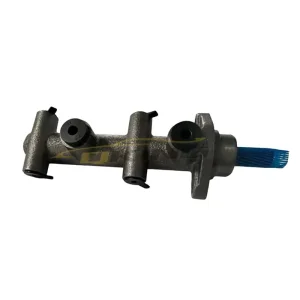
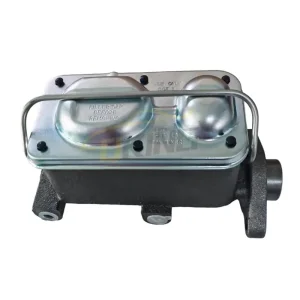
In the global automotive market, braking performance and reliability represent the ultimate margin of safety. Yet, vehicular lifecycle audits consistently reveal that OEM brake issues are among the most persistent threats to operator safety and fleet availability. These failure modes span across hydraulic leakage, material fatigue, bore scoring, and elastomer degradation.
As an industry-leading OEM brake parts manufacturer, we analyze root engineering causes of component failure. By examining structural defects, metallurgical inconsistency, and sealing breakdown, we implement preventative solutions. Wuhu Qiujing Auto Parts leverages over two decades of automotive testing and manufacturing experience to engineer hydraulic systems that mitigate common failures found in standard aftermarket parts.
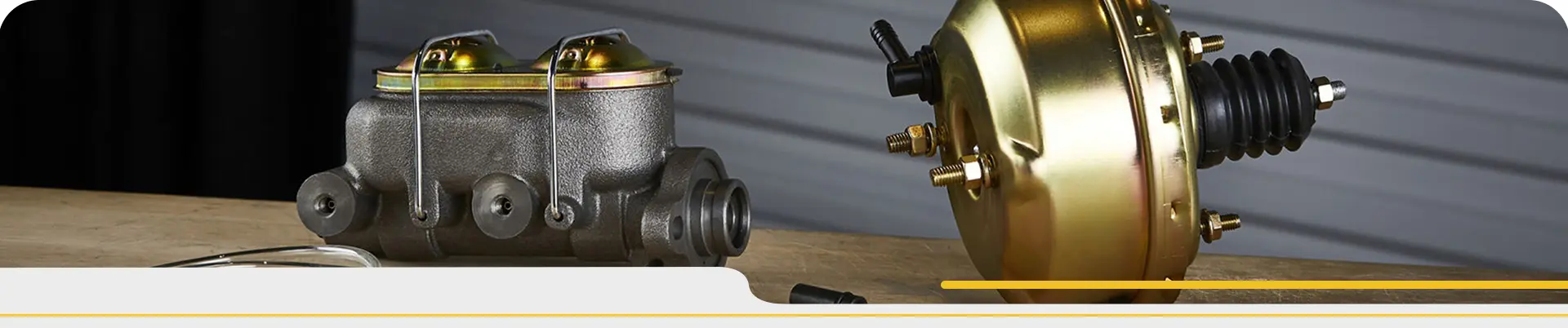
Understanding the micro-mechanics of seal wear, fluid pressure dynamics, and metallurgical oxidation.
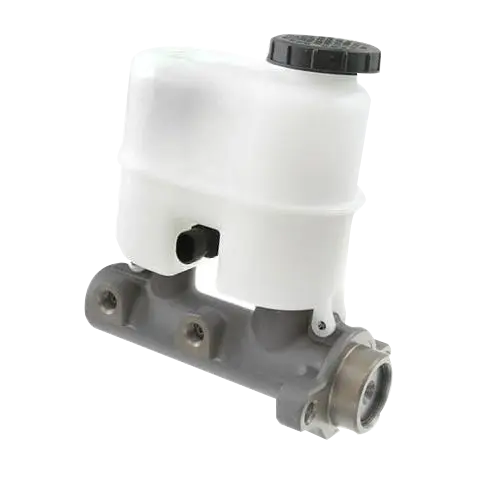
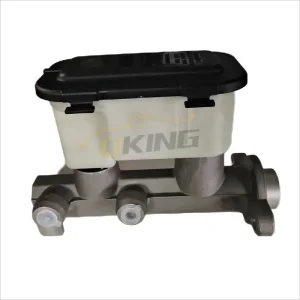
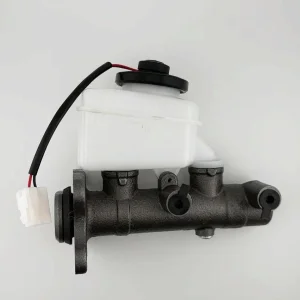
Internal bypass occurs when the primary or secondary EPDM piston cups lose physical contact with the cylinder bore. This is caused by chemical degradation from contaminated DOT fluid, thermal swelling, or micro-scratching on the aluminum bore. The result is a progressive drop in hydraulic system pressure, yielding a soft brake pedal and compromised stopping distances.
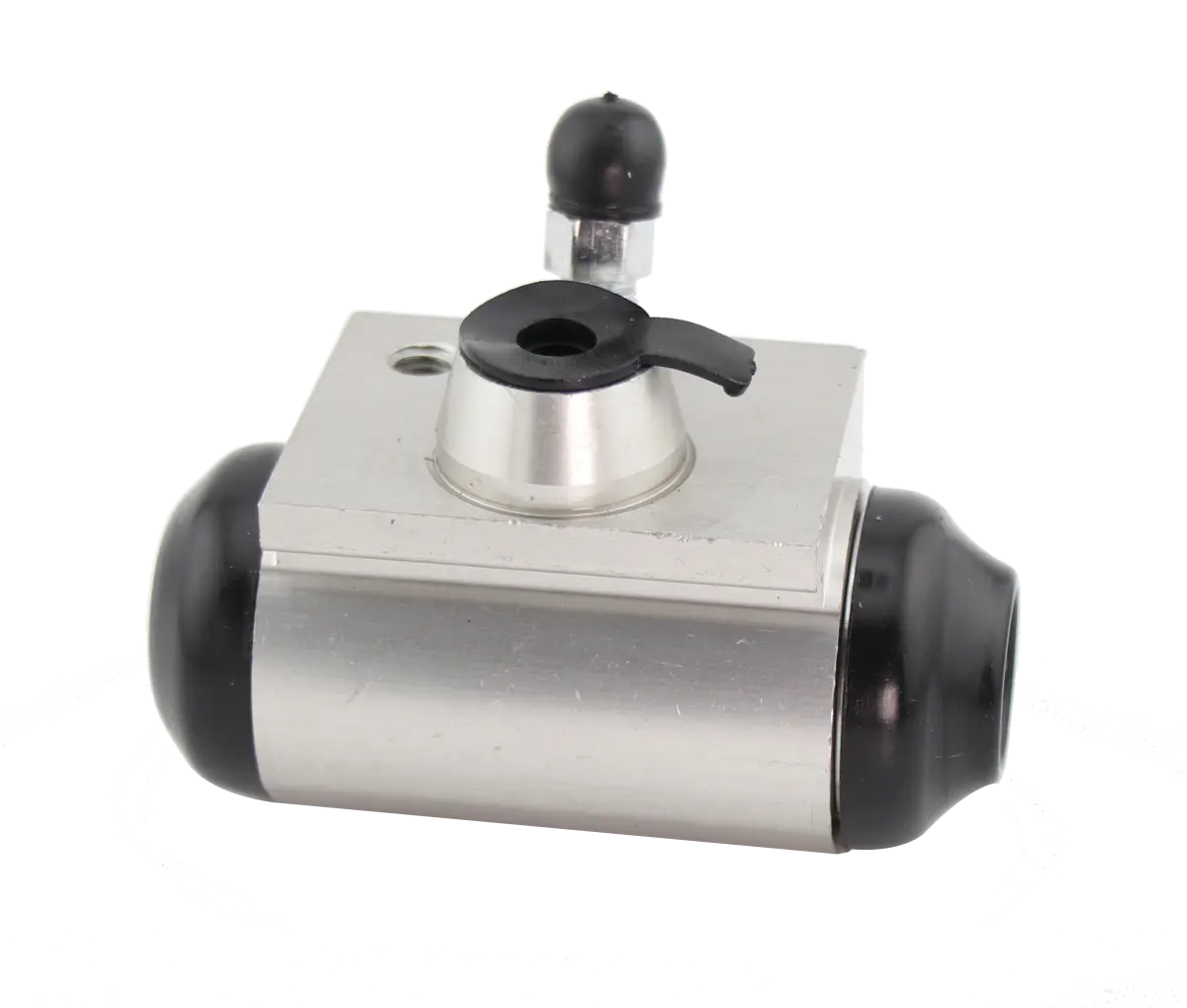
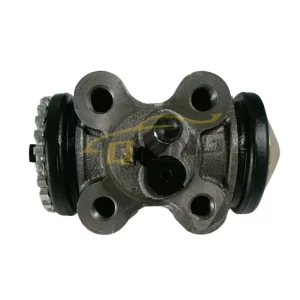
Brake wheel cylinders are constantly exposed to dust, moisture, and extreme thermal cycling. The failure of external dust boots allows grit to enter the cylinder bore. When the pistons actuate, the abrasive particles tear the elastomer cups. This results in external hydraulic leaks, lining contamination, and dangerous rear brake imbalance.
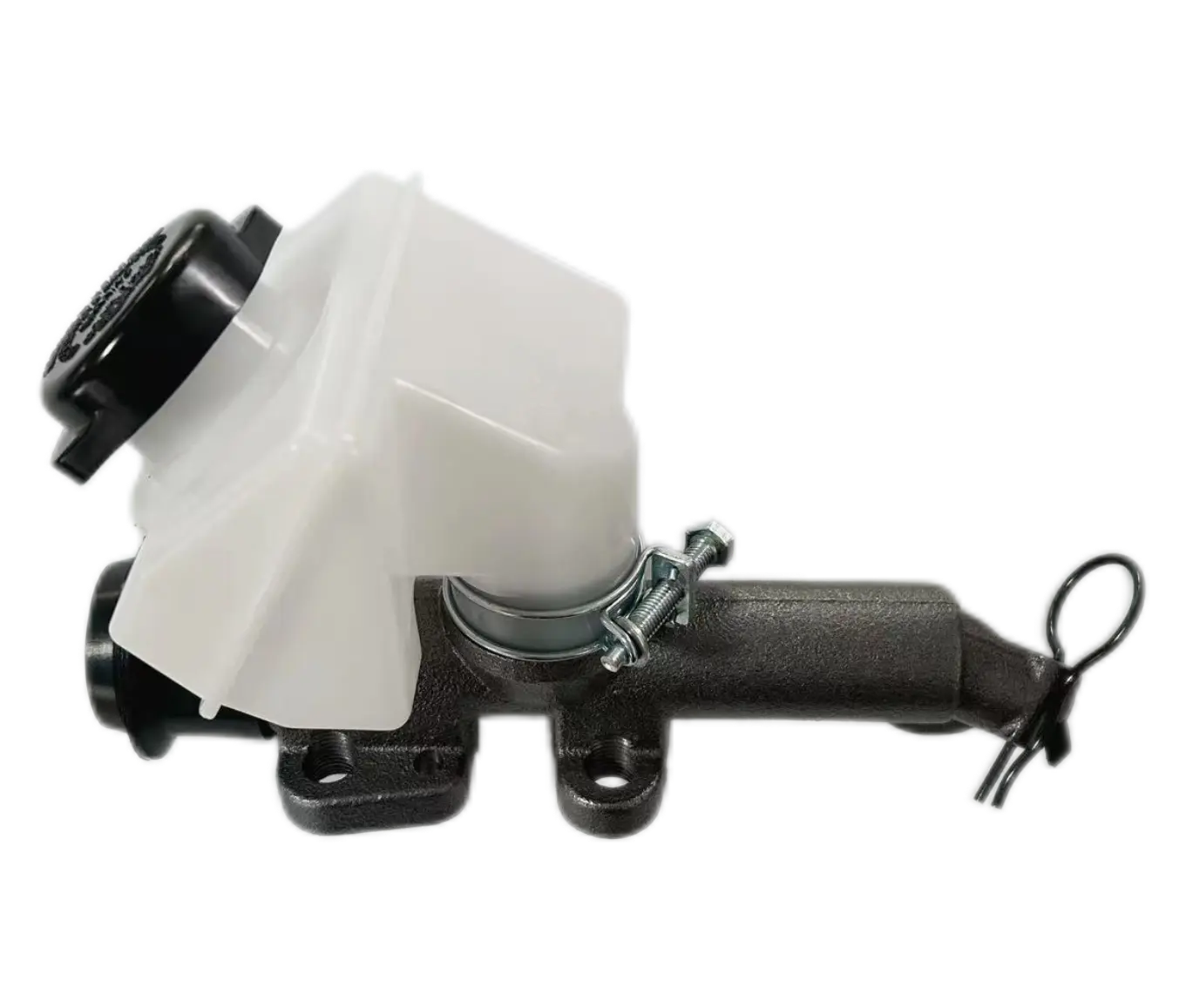
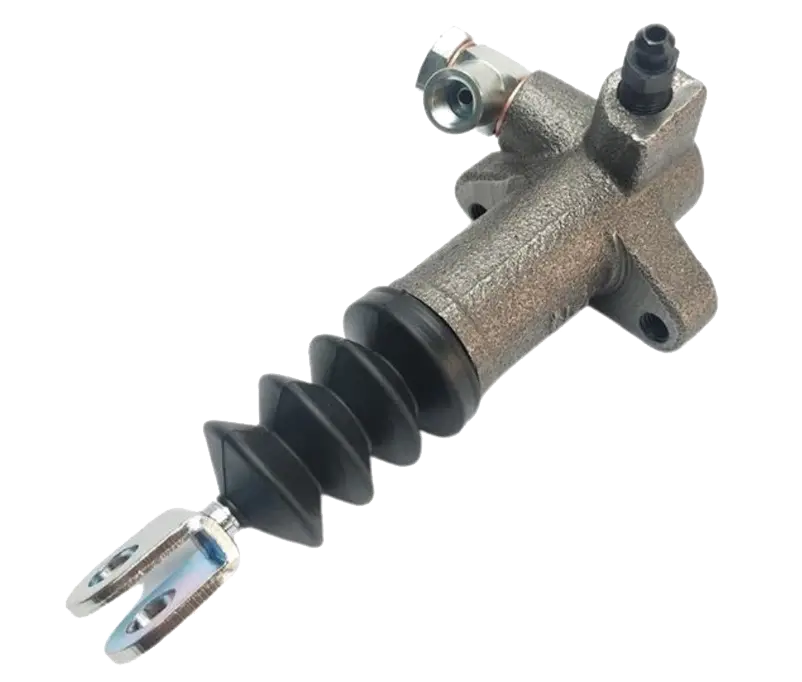
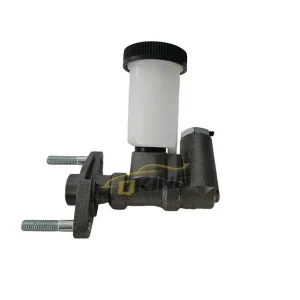
Both Clutch Master and Slave cylinders share hydraulic routing. Failure often stems from poor bore honing during production. Tiny micro-burrs in raw metal accelerate seal deterioration. This causes incomplete clutch release, gear grinding, and long-term transmission sync damage.
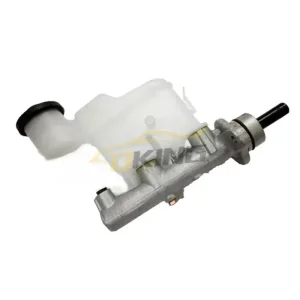
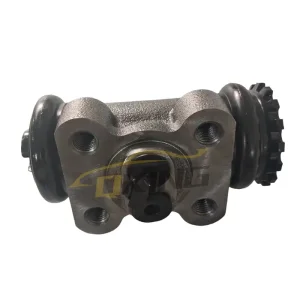
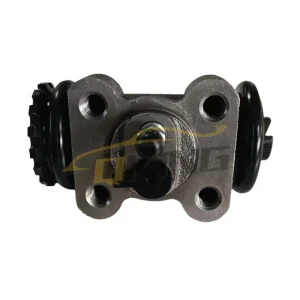
Our complete range of precision manufactured hydraulic controls and safety-critical components.
As the global transportation sector pivots toward Electrification and Advanced Driver Assistance Systems (ADAS), braking architectures are undergoing rapid changes. The traditional linkage between vacuum assist assemblies and mechanical master cylinders is giving way to active electro-hydraulic braking systems (EHB) and dry brake-by-wire (EMB) setups.
For modern hybrid and pure electric platforms, regenerative braking requires a master cylinder capable of supporting rapid pressure buildup and precise volume regulation. This demand elevates the importance of bore finish tolerances and piston response times. Wuhu Qiujing is actively designing next-generation master cylinders compatible with smart electric boosters (e-boosters). These designs incorporate low-friction sealing materials and lightweight housing alloys, ensuring reliability across a wider thermal range.
Braking anomalies are rarely isolated to a single component. System-level issues often point to compatibility errors between friction pads, caliper pistons, and fluid displacement volumes. Our engineering approach treats the braking assembly as an interconnected hydraulic loop.
We analyze fluid dynamics to optimize proportioning valves, aligning front and rear braking forces to match vehicle load shifts. This minimizes stopping distances, prevents rear-end yaw instabilities, and protects calipers from thermal overload during hard deceleration. By managing pressure and flow variables, we protect the entire system from premature wear.
Factory Area
Yearly Production Capacity
Manufacturing Experience
Skilled Automotive Engineers & Operators
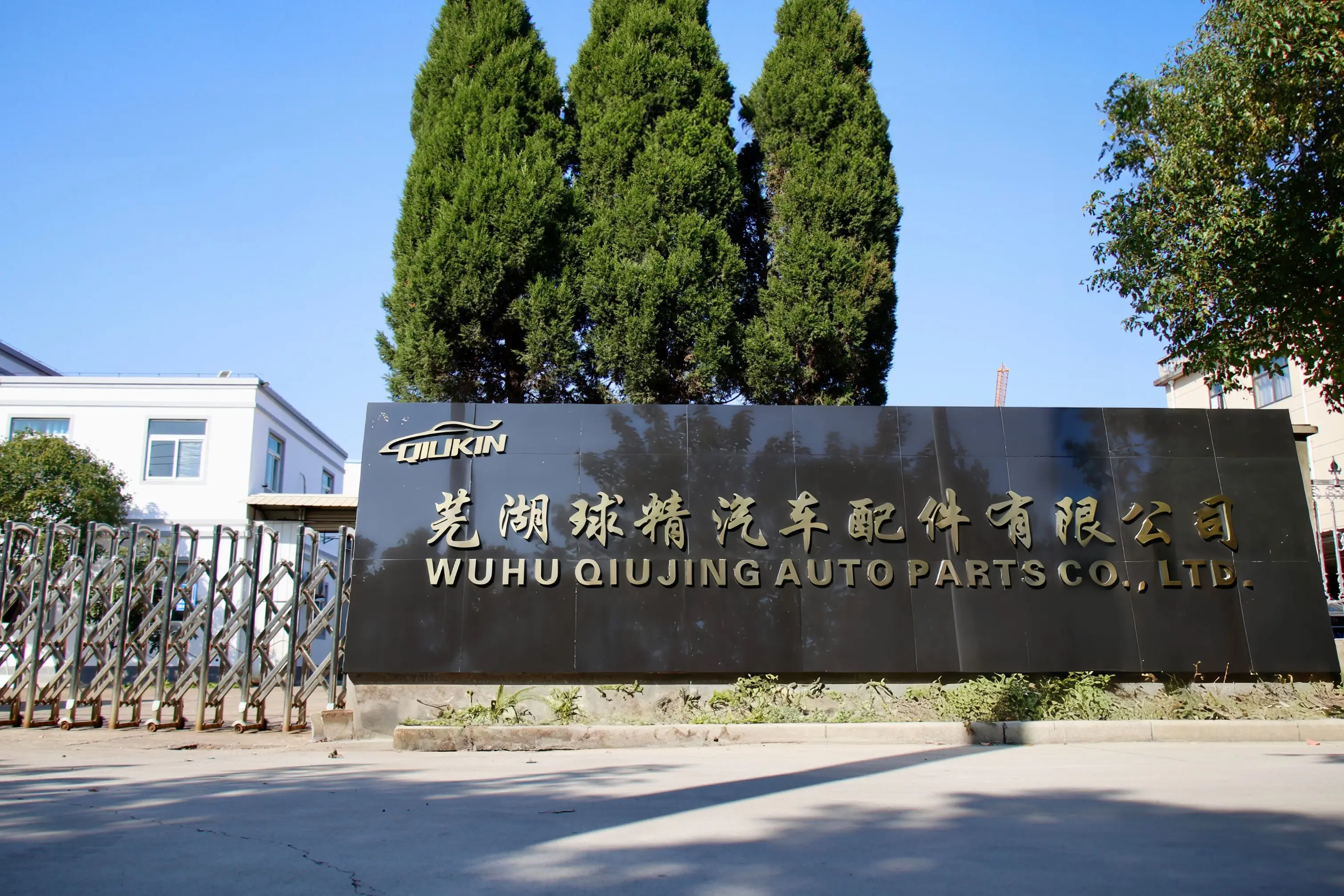
Automotive supply chains require a balance of high volume, low defect rates, and cost stability. Established in 2007, and built on foundational industry experience dating back to 1996, Wuhu Qiujing Auto Parts Co., Ltd. has developed an integrated manufacturing model to deliver reliable components.
Our factory utilizes digital machining lines, automated hone operations, and automated test fixtures to eliminate variance. By control-casting raw alloy bodies internally, we regulate metallurgical composition, ensuring high tensile strength and long-term corrosion resistance. Every run is audited using coordinate measuring machines (CMM) and high-pressure pneumatic testers to guarantee dimensional consistency and seal retention.
Our commitment to international quality standards guarantees safety on roads worldwide.
To verify components against pressure spikes, we perform stroke validation tests. Master and wheel cylinders are subjected to 1,000,000 duty cycles under varying temperatures (-40°C to 120°C). This process simulates a lifetime of heavy braking, ensuring zero pressure loss and minimal cup distortion.
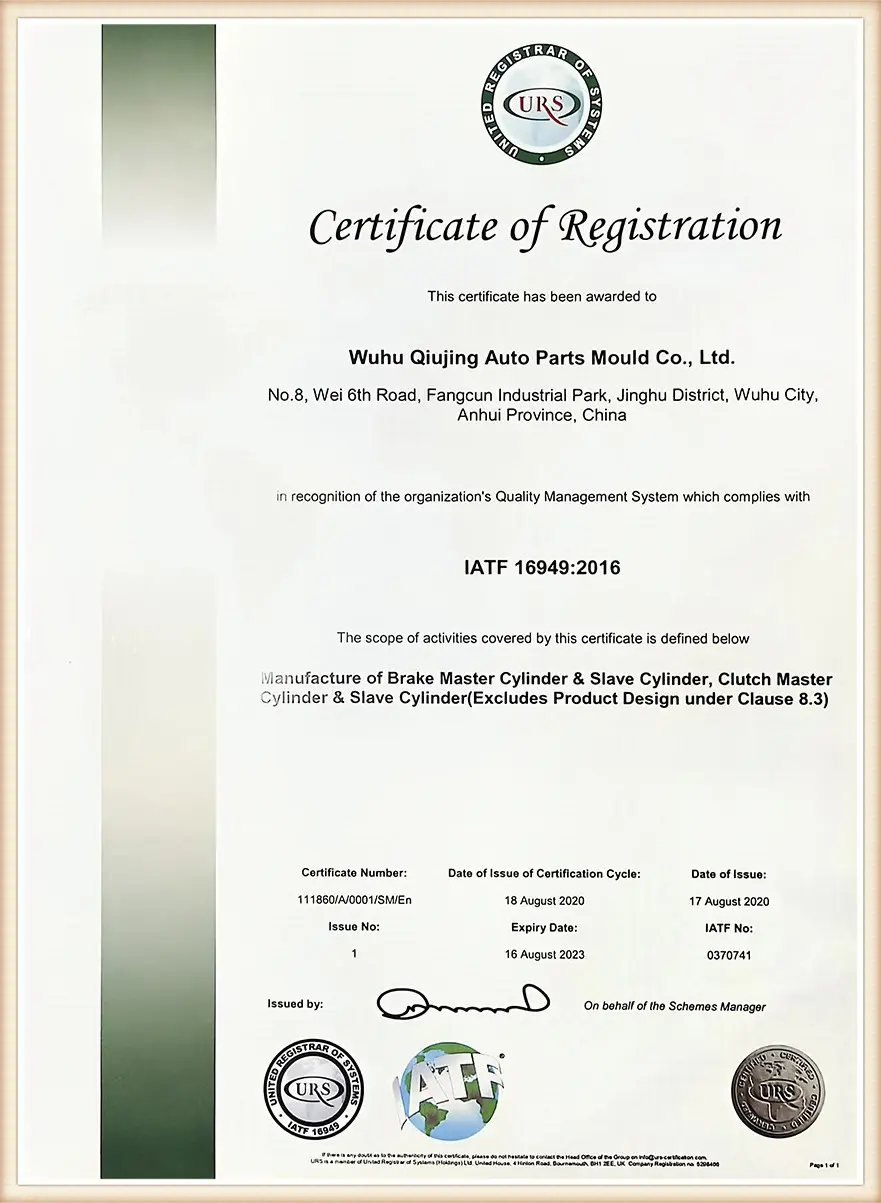
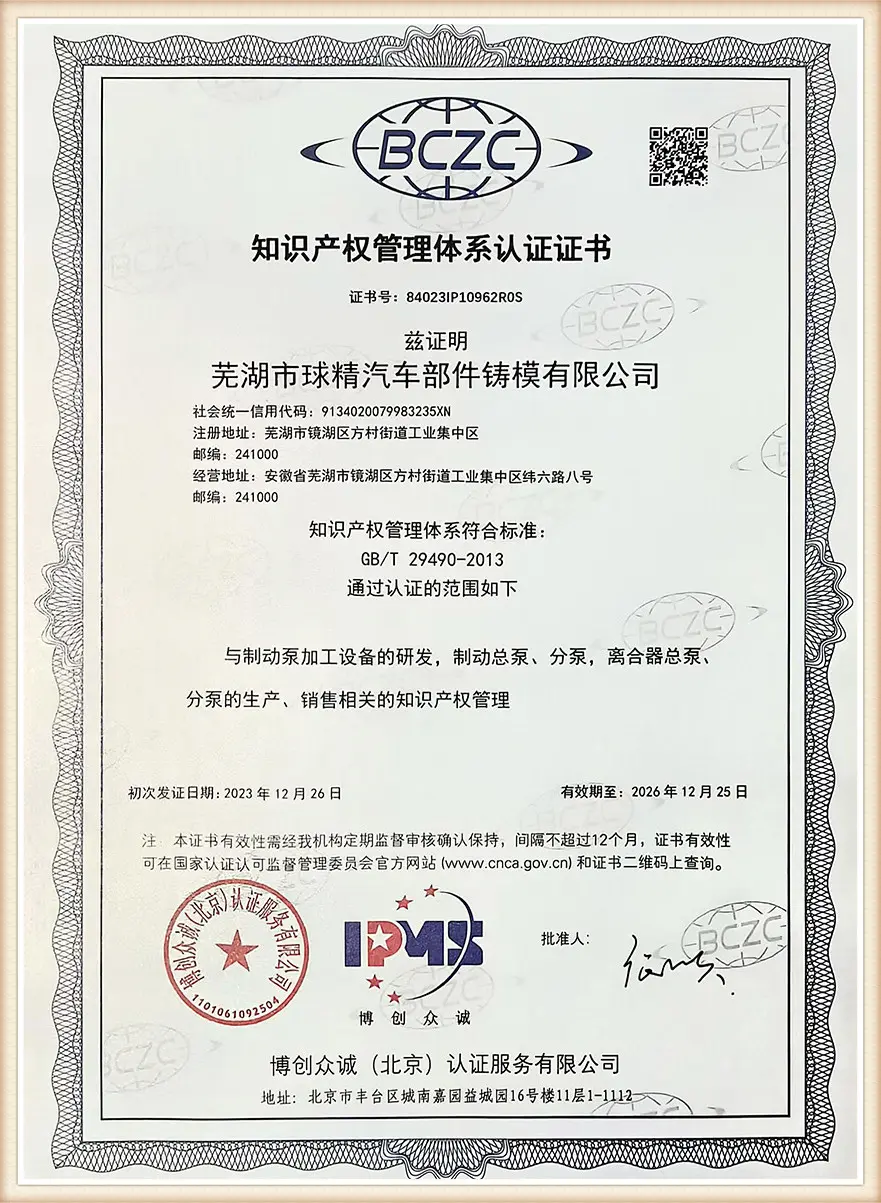
Our product lines comply with international safety criteria. We design, manufacture, and verify components in strict accordance with the following standards:
Automotive parts distributors and Tier-1 procurement offices face challenging purchasing environments. Tariffs, fluctuating raw material costs, and logistics disruptions require a structured risk management strategy. To maintain supply chain continuity:
First, audit manufacturing source depth. By operating an integrated 6000m² facility with an annual capacity of 2 million units, Wuhu Qiujing maintains direct control over component pricing and lead times. Second, verify technical documentation. We supply complete PPAP (Production Part Approval Process) files, material certificates, and test results to support client validation. This transparent verification process helps global buyers reduce regulatory risk and secure supply lines.
Compliance and testing verify our commitment to reliable automotive manufacturing.
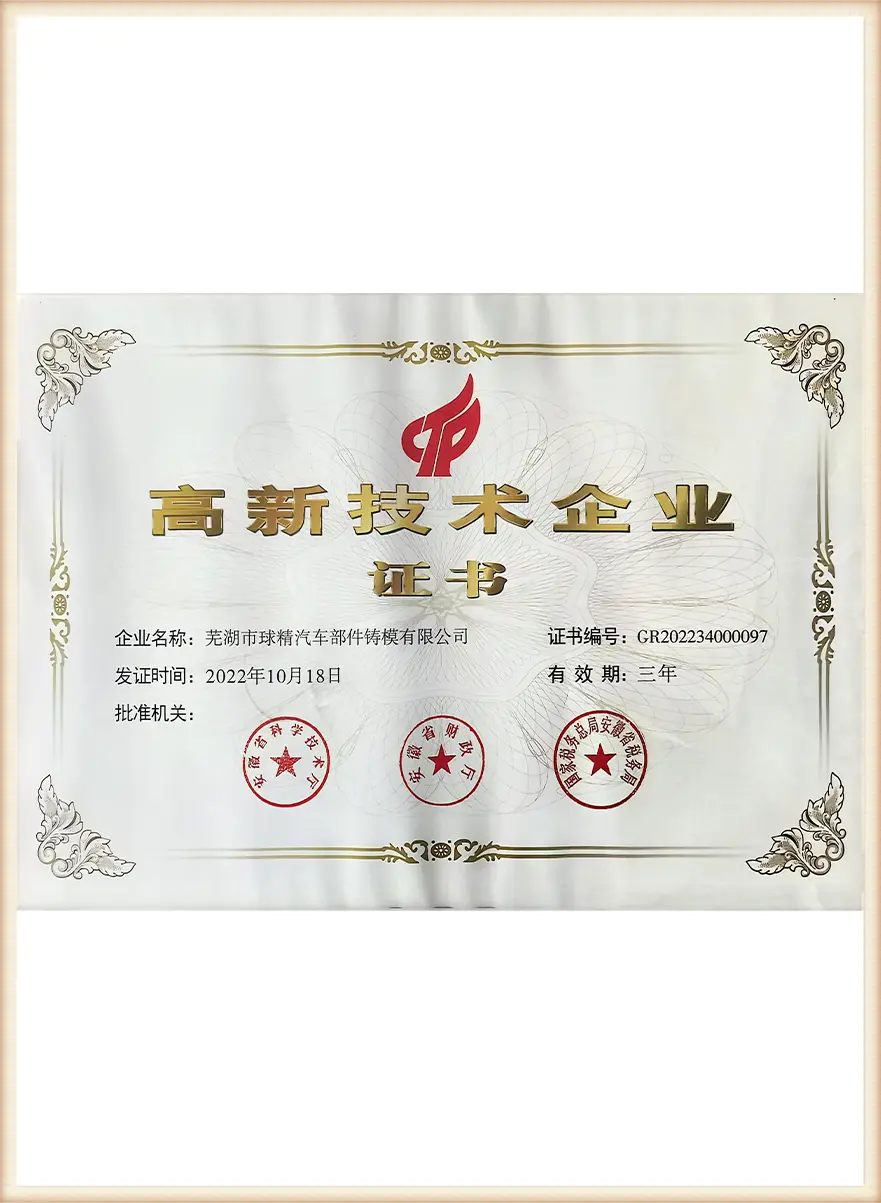
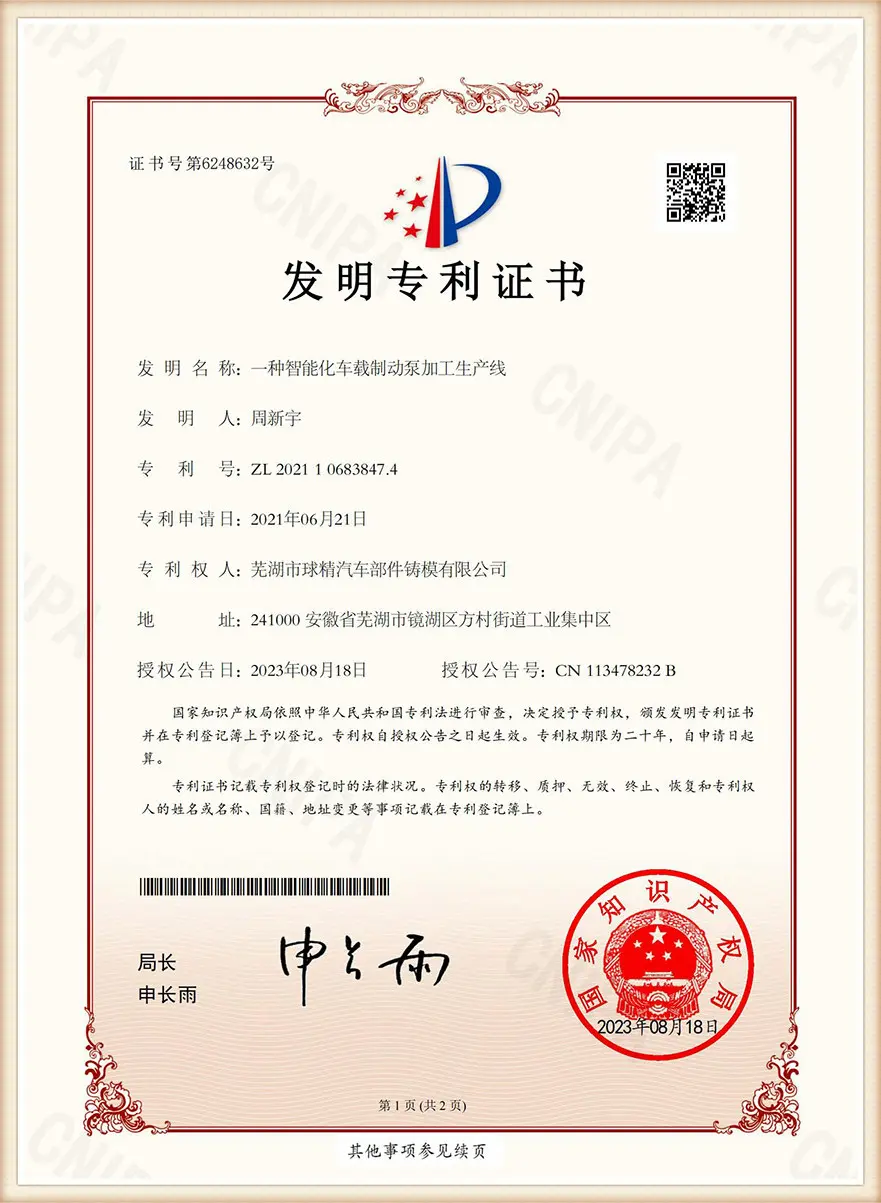
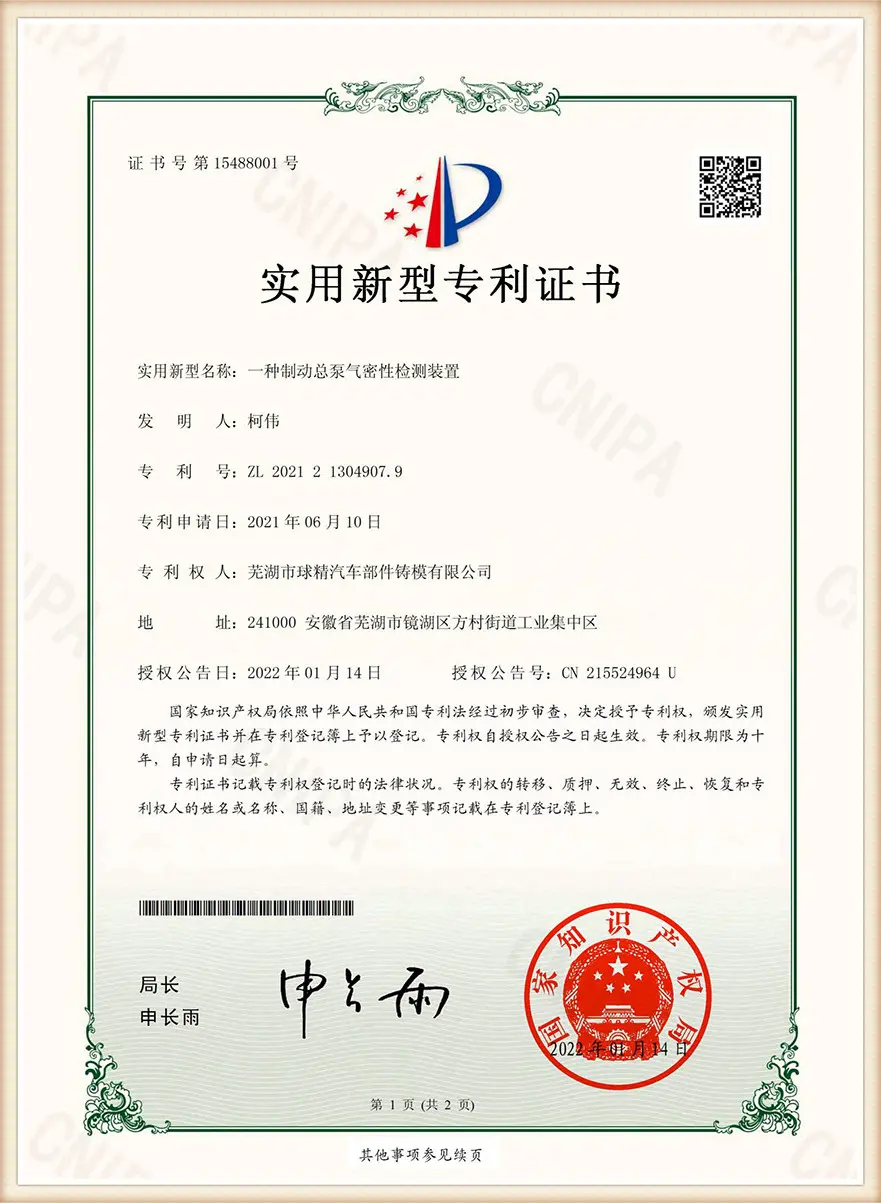
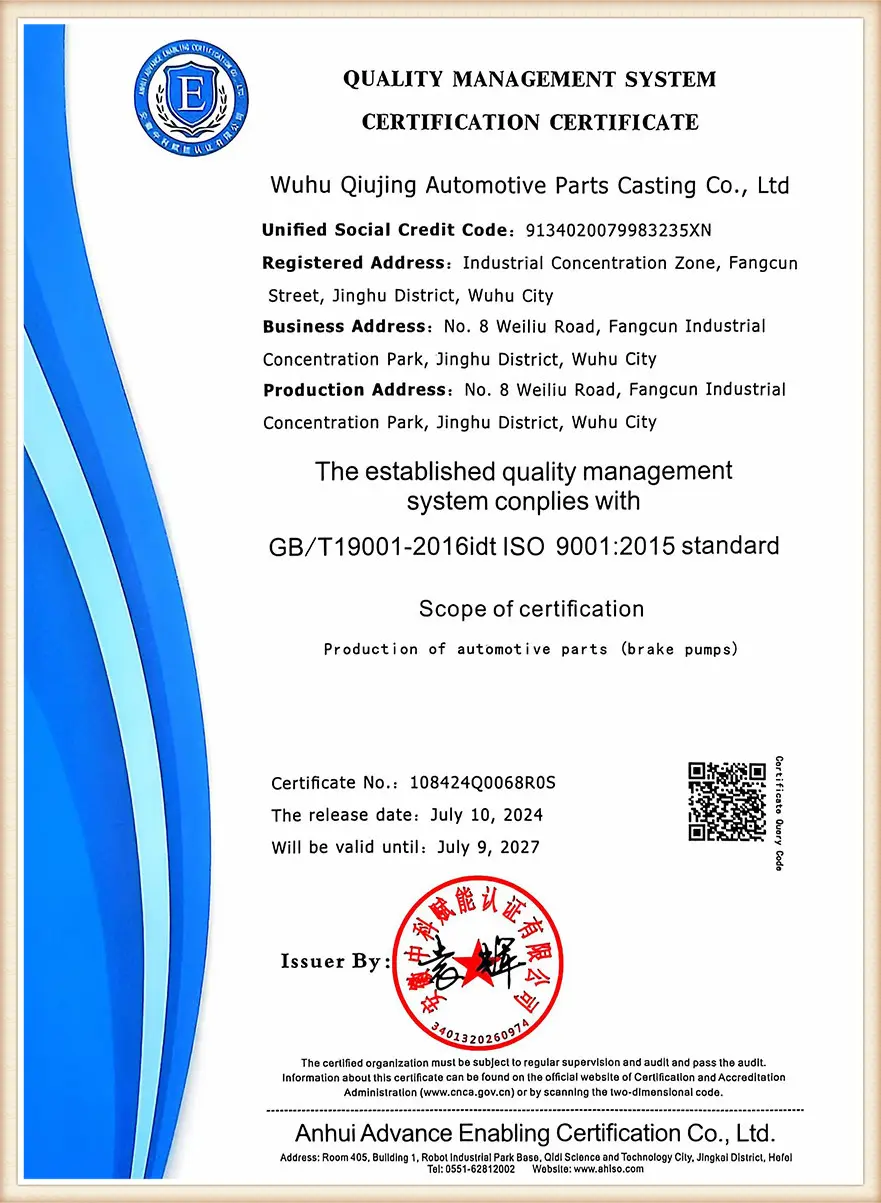
Technical answers to common engineering, procurement, and manufacturing questions.
Internal bypass occurs when hydraulic fluid leaks past the primary piston cup during brake pedal actuation. This leak prevents pressure build-up and is typically caused by micro-scoring of the cylinder bore, wear on the elastomer cup, or fluid contamination that degrades the seal material.
Our facility uses multi-step vertical and horizontal honing systems to machine each bore. This process achieves targeted Ra surface roughness parameters, minimizing friction on rubber seals and preventing leaks or premature wear.
We use premium EPDM formulations designed for chemical compatibility with glycol-based DOT 3, DOT 4, and DOT 5.1 brake fluids. These seals maintain elasticity and structural stability across a wide temperature range, from -40°C to 120°C.
Yes. As an IATF 16949 certified manufacturer, we provide complete Level 3 PPAP documentation, including Process Flow Diagrams, FMEA (Failure Mode and Effects Analysis), Control Plans, Dimensional Results, and material certifications.
Follow our latest facility expansions, holiday updates, and seasonal shipping news.
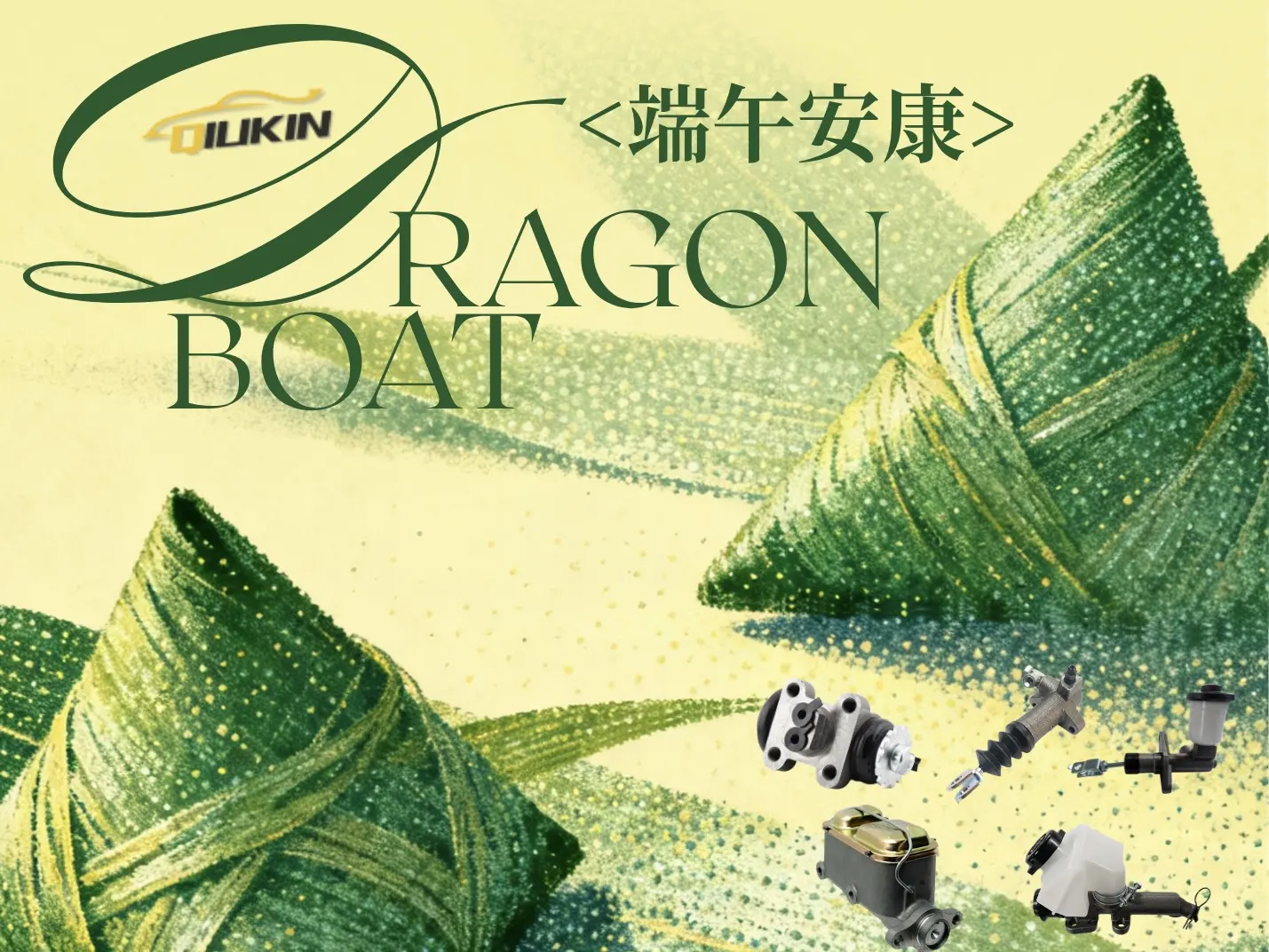
Read our operational schedule and holiday planning to align your procurement timelines.

Production operations have resumed, and assembly lines are running to fulfill backlogged orders.
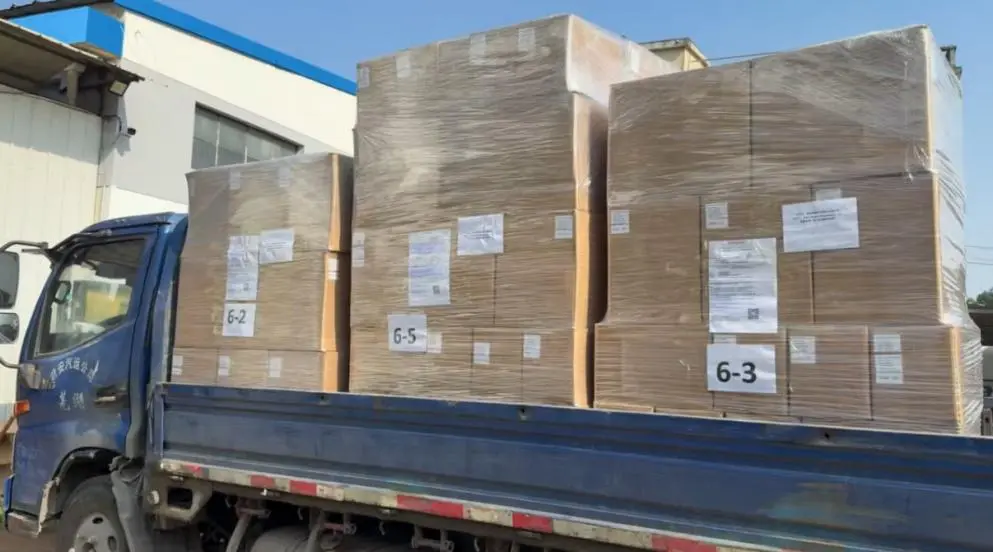
Wuhu Qiujing finalized year-end logistics dispatches to ensure timely delivery before seasonal breaks.
Premium replacement components matching original dimensional and hydraulic specifications.

Contact our engineering and sales office to discuss customized designs, bulk procurement options, or to request product quotes.